What Nobody Tells You Before You Start
When I began living and traveling full-time on July 17, 2017, I had a plan or at least something that looked like one.
Nomadic by Nature is a reader-supported publication. To receive new posts and support my work, consider becoming a free or paid subscriber.
I had a Navy pension, years of preparation behind me, and a belief that I could build a meaningful life with far less than everyone said I needed. Before taking that final step, I worked everything out on paper. The numbers looked reasonable. The plan seemed solid. On paper, the road was predictable.
The actual road, however, was not nearly as kind.
My preparation for this life had begun years earlier. After retiring from the Navy in 2004, I continued working a full-time job while slowly planning for the day when I could finally live on the road. During those years, I traveled part-time in a 1995 Chevrolet 3500 duelly. I traveled in my trusty old red Chevy dually for many years as I transitioned from Navy life to civilian life and continued using it for part-time travel and adventure.
That truck was never intended to be my permanent home. It was persay a classroom. That gave me a place to test the life, learn what I could live without, and discover what I would eventually need for the long term.
I budgeted as though the road would cooperate with me, as though nothing major would break, change, or go wrong.
It did not take long for the road to correct that assumption.
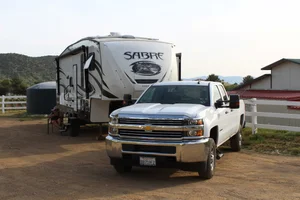
So 13 years later in 2017 and on a whim, a 27-foot fifth wheel was purchased, the townhome was sold, and the part-time adventures became a full-time life. There was no traditional home waiting in the background anymore. The rig was home, and the road became part of everyday living.
What follows is not a checklist I copied from the internet. These are lessons that survived real life. Some began behind the wheel of my Chevrolet duelly along stretches of the California coast and across wide-open desert landscapes. Other lessons learned after moving into the fifth wheel and discovering the difference between traveling part-time and living this life every day.
Many people only saw those amazing places from thirty thousand feet in the air or they flew over them. I was down there living in them, driving through them, and allowing them to change me.
Almost every new nomad wants the rig that will solve every possible problem before they have experienced a single problem worth solving.
I understand that because I once thought the same way.
It is easy to convince yourself that you need more space, more equipment, more storage, and more comfort before you can begin. You start preparing for every possible situation, including many that may never actually happen.
The truth is that you do not fully know what you need until you begin living the life.
My years of traveling part-time in the Chevy taught me more about my actual needs than any brochure, floor plan, or online discussion ever could. They helped me understand the difference between what looked useful and what was genuinely necessary.
The road will tell you what matters, what does not, and what you probably never should have purchased in the first place. It is not shy about correcting you.
Start smaller than you think you need. Keep the setup simple. Learn how you actually live before investing in the imaginary version of yourself you believe will exist on the road.
Let your real life determine your upgrades later.
That is what I eventually did. I began my full-time journey in a 27-foot fifth wheel, lived and traveled in it for five years, and upgraded to a 35-foot fifth wheel in 2022. The larger rig came after years of experience had shown me what I wanted not before I had enough experience to know the difference.
Nobody wants to hear this lesson, but ignoring it is one of the fastest ways to bring the dream to an end.
Know your monthly number before you begin planning your route.
Understand what it will cost to fuel the rig, maintain the rig, insure everything, eat, camp, repair what breaks, and manage the expenses you did not see coming.
There will always be expenses you did not see coming.
I had a Navy pension when I began full-time nomadic living, but that did not remove the need to plan carefully. A dependable income provides stability, but it does not make poor financial decisions disappear. Fuel still costs money. Tires still wear out. Equipment still fails. Unexpected repairs still seem to arrive at the least convenient moment.
I have watched people romance their way into a beautiful rig and completely out of a bank account within the same season.
The freedom people are chasing is often arithmetic wearing a bandana.
That may not sound romantic, but it is true. Freedom becomes much more difficult to enjoy when every unfamiliar sound from the truck or rig creates financial panic.
Know what comes in. Know what goes out. Understand the difference between the cost of taking a trip and the cost of maintaining an entire life on the road.
Do the math first.
Then allow yourself to dream.
My journey began with part-time travel in my red Chevy dually. When I officially became a full-time nomad in 2017, I moved into a 27-foot fifth wheel. Five years later, I upgraded to the 35-foot fifth wheel I continue to live and travel in today.
Each setup represented a different season of the journey.
The walls changed, but the work did not.
There was always something to repair, something to learn, and something that operated differently than I expected. Every vehicle and rig had its strengths, its limitations, and its own way of reminding me that it was a machine not a permanent answer to every problem.
The real work is learning how to respond when something breaks. It is understanding what your rig can handle while also accepting what they cannot. It is also learning how to adjust your plans without allowing every interruption to feel like a personal failure.
It is also making peace with a life that does not come with a permanent traditional address, a familiar neighborhood, or a clear answer about where you will be several months from now.
That is the actual education, the rig is simply where many of the lessons take place.
Build room into your time, your money, your travel plans, and your expectations.
The road does not punish people for planning. It punishes plans that leave no room for real life.
A mechanical failure, a sudden weather system, an illness, a closed road, or a change of heart about where you want to be next month does not automatically have to become a crisis.
It becomes a crisis when your plan depends on everything going exactly right.
Give yourself extra travel days. Keep money available for repairs. Avoid committing every dollar before the month begins. Leave enough room in your schedule to stay when a place feels right or to leave when it does not.
Do not create a route so rigid that you are forced to travel through dangerous weather simply because a reservation or deadline says you should. Do not spend so much purchasing the rig that there is nothing left to maintain it. Do not assume that because a journey looks simple on a map, it will unfold that way on the ground.
Life out here requires flexibility.
A rigid plan may look impressive on paper, but the road has never cared much about paper.
My years in the red Chevy dually gave me valuable experience, but those adventures were still part-time.
I had a job to return to. I had a traditional home base. Even during longer trips, there was still a familiar life waiting for me when the adventure ended.
That changed on July 17, 2017.
When the townhome was sold and the 27-foot fifth wheel became home, traveling was no longer something I did temporarily. It became part of how I lived.
That distinction matters.
Part-time travel can teach you how to pack, navigate, camp, conserve resources, and handle yourself away from home. Full-time nomadic living asks different questions.
Where will you receive mail? How will you manage healthcare? What happens when your home needs repairs? How do you maintain relationships when you are constantly moving? How do you build routines without becoming trapped by them? How do you remain grounded when your physical surroundings continue to change?
Traveling shows you the road.
Living on the road shows you yourself.
Nobody tells you that one of the hardest parts of starting may have very little to do with routes, campsites, equipment, or logistics.
Sometimes the hardest part is the silence.
It arrives after the familiar life disappears behind you and nobody is asking what time you will be home. There is no supervisor waiting, no daily commute pulling you forward, and no established structure telling you what comes next.
I had spent twenty-one years in the Navy. After retiring in 2004, I spent another thirteen years working a conventional full-time job while preparing for this life.
That is more than three decades of structure, responsibility, schedules, deadlines, and expectations.
None of that simply disappeared from my mind during the first weekend on the road.
For a while, I did what many new nomads do.
I kept moving down another road, to nother town, or to another destination.
More miles gave me something to focus on. Movement created its own kind of structure and kept me from sitting too long with the quiet.
Eventually, I realized that the silence was not something I needed to escape.
It was part of the reason I had chosen this life.
The quiet gave me room to separate who I actually was from the roles I had carried for decades. It helped me understand that freedom was not simply the absence of a work schedule or a permanent address. Freedom also meant learning how to direct my own days without needing someone or something else to constantly define them for me.
Give yourself time to sit with that.
Let the old routines unwind naturally. Do not feel pressured to fill every day with movement simply because you finally have the freedom to go anywhere.
You do not need to prove that you are nomadic by constantly changing locations.
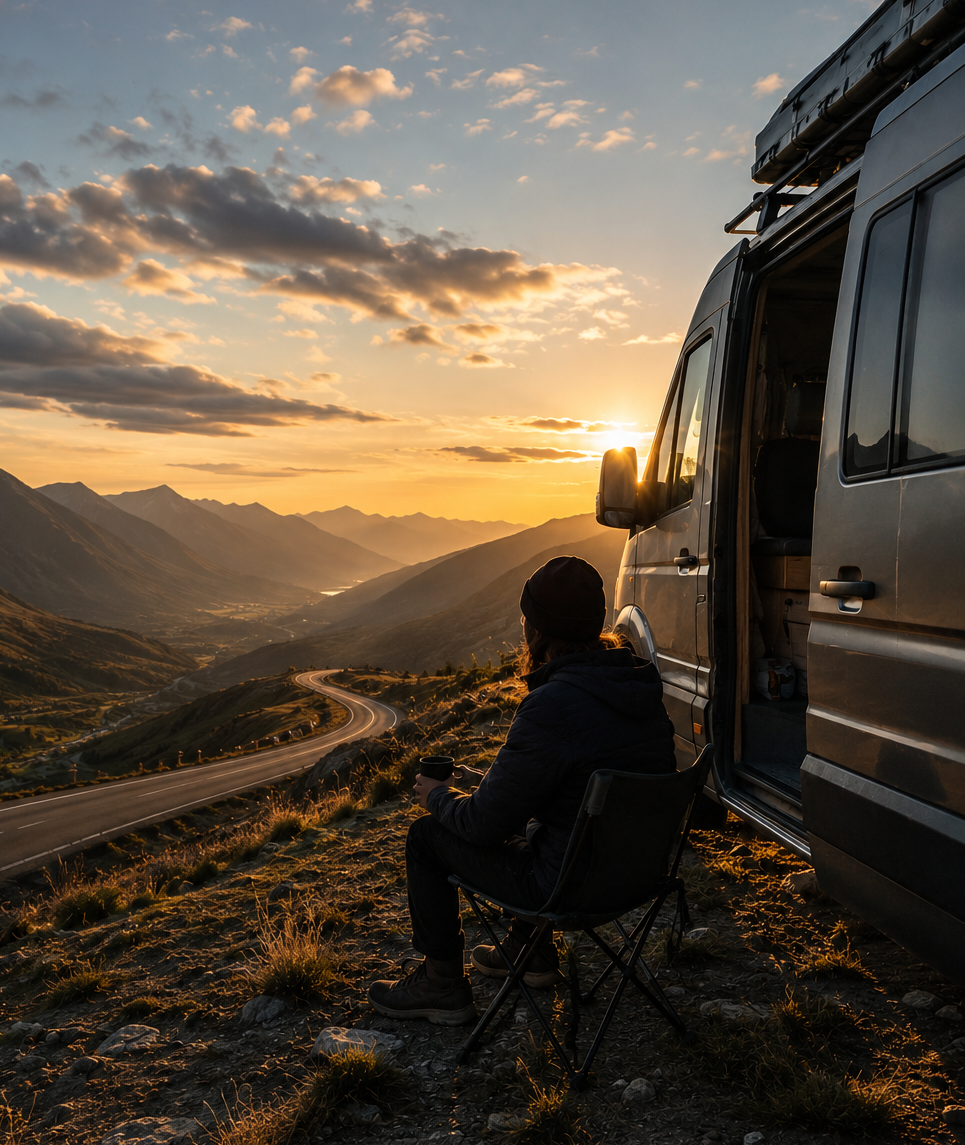
Sometimes the most important part of the journey begins when you stop driving long enough to hear yourself again.
There is no perfect way to begin this life.
You can research every rig, calculate every expense, study every route, and prepare for every problem you can imagine. Preparation matters. It can save you money, reduce unnecessary stress, and prevent avoidable mistakes.
But preparation will never remove every uncertainty.
At some point, the plan has to leave the paper.
The road will challenge some of what you believed, confirm other parts, and introduce lessons you never knew you needed. It will expose the difference between the life you imagined and the one you are actually prepared to live.
That is not a sign that you failed to plan.
That is simply how experience works.
Nomadic by Nature is a reader-supported publication. To receive new posts and support my work, consider becoming a free or paid subscriber.
I spent years preparing before I officially began living nomadically on July 17, 2017. Even after all that time, I still had things to learn. Nearly nine years later, I am still learning.
Start smaller than you think you need. Understand your money. Leave room for the unexpected. Remember that the rig is a tool, not the purpose of the journey.
Most importantly, allow life to teach you.
Always remember this one lesson:
“The road will not always be kind, but it will usually be honest”.